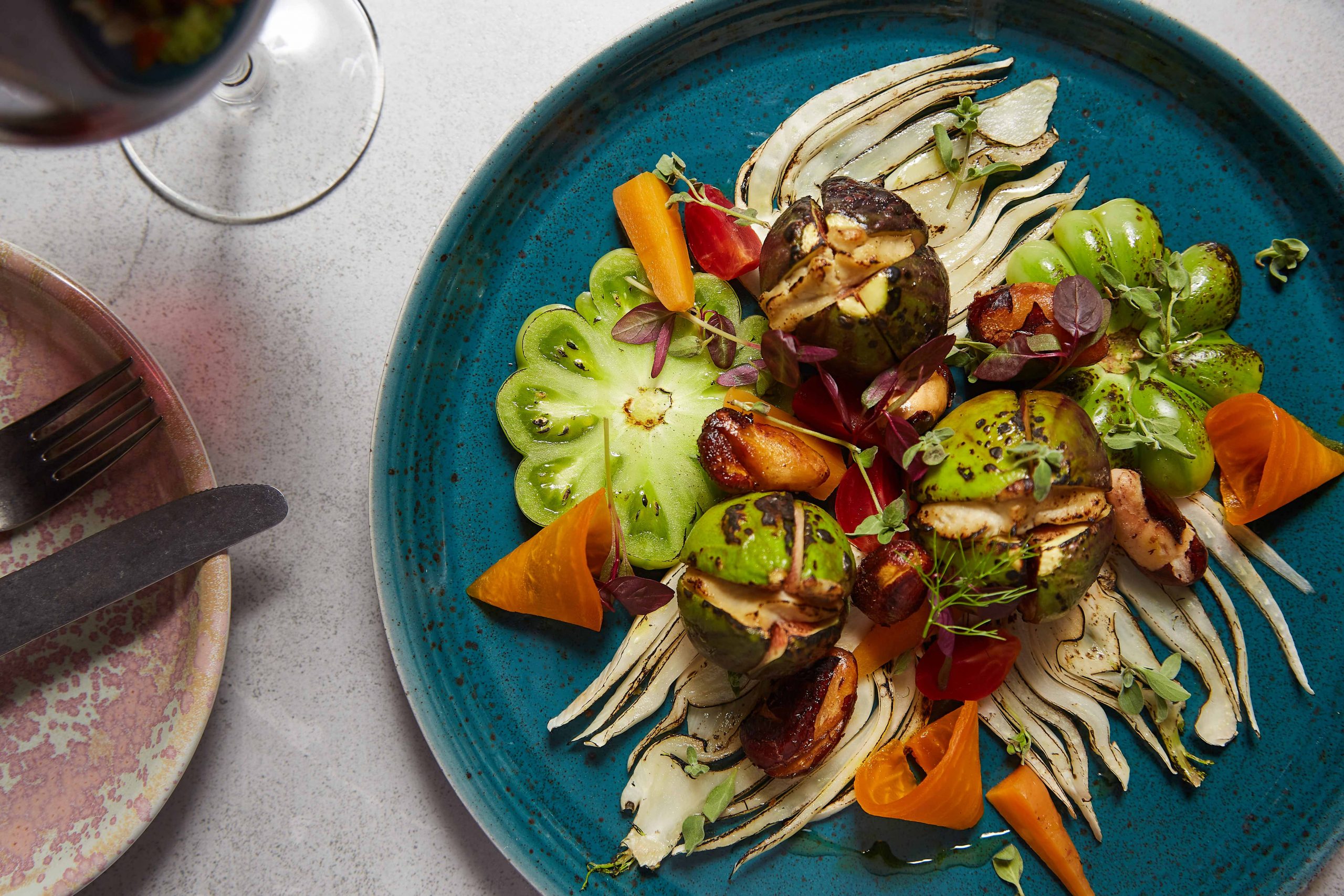
It was never about the chicken. It was always about the wine-soaked soul of the dish.
The name translates to ‘rooster on wine’. The original idea was a way to cook old roosters that had outlived their purpose in the hen house. The meat would be tough, so braising in wine was necessary to break down the hardened muscles and get it to a point where it would be edible. This kind of undesirable meat (sorry old coq) was the cheapest in the markets. It was a peasant’s dish of Gaulish tradition. Coq au vin became formalised in French culinary literature in the early 20th century. It gained national and international recognition through classic French cuisine and was popularised outside France by figures such as Julia Child, who presented it as an emblematic example of French home cooking adapted for modern kitchens.
Today, it is regarded less as peasant fare and more as a canonical dish of traditional French gastronomy, with regional variations based on local wines and ingredients.
This is one of those dishes from my past meat-cooking life that more often than not I miss a lot. I realised that it was not so much the meat that I missed. I was never a big fan of chicken. It was the thick, leathery, dark sauce and vegetables that begged for bread and a Burgundy (Pinot Noir). That’s what I miss. The way the wine reduces down to something almost velvety, clinging to everything it touches. The earthy sweetness of the pearl onions softened in all that red wine and butter.
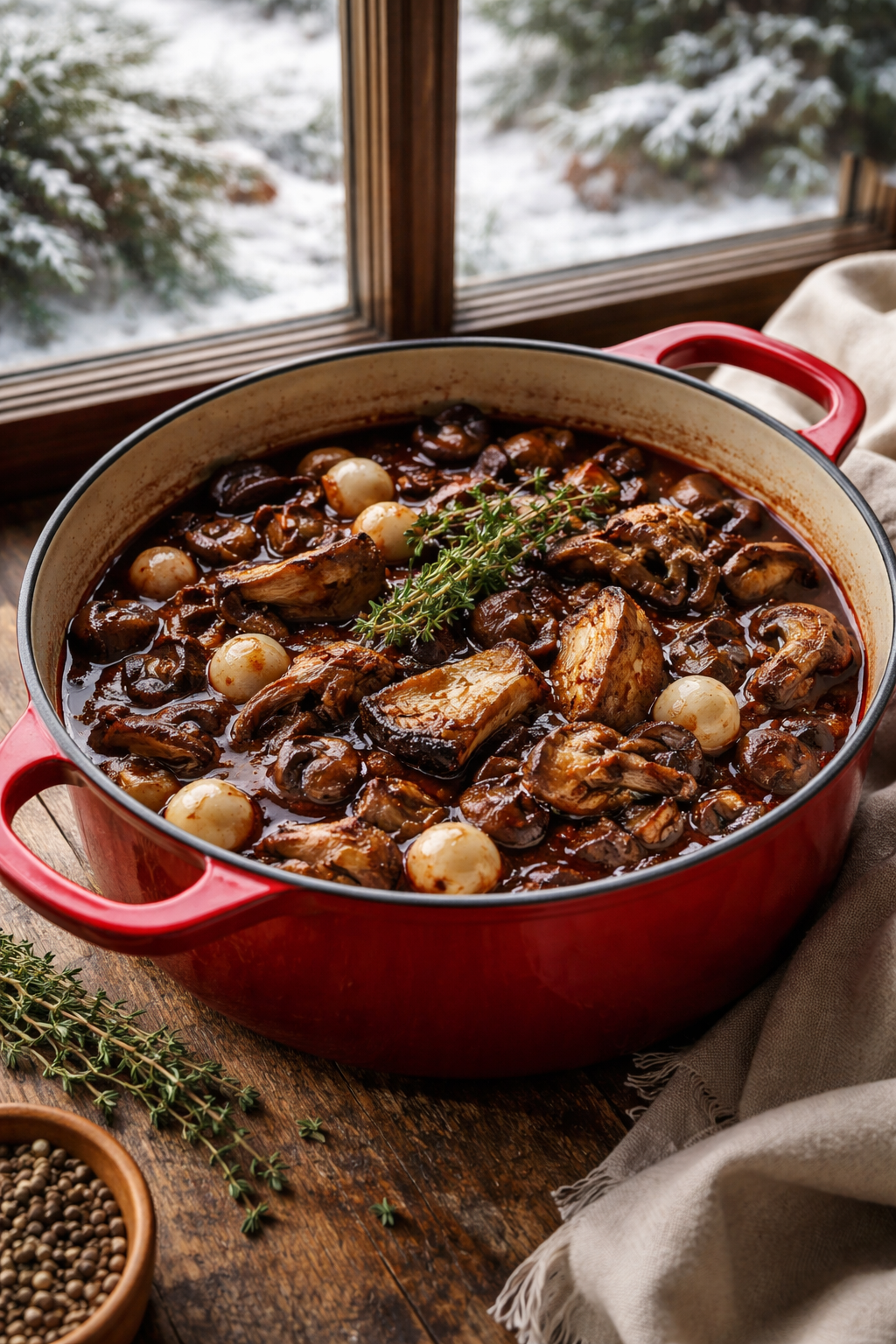
Since I embarked on vegetarian cooking, I’ve tried many meat-free versions of this dish. This is the one I enjoy making the most. I just don’t know what to call it: King-au-vin? Hen-au-vin? Maybe. Or just Big-Beautiful-Red-Wine-With-Stuff.
The secret to a good traditional coq au vin is not just the aforementioned old coq, but the lardons. And here’s the accident I forgot to tell you about. I had a dish with hen-of-the-woods last year that I’ll bring back at some point this year as soon as I finally have enough of Lion’s Mane (I am obsessed with it at the moment). I usually steam the hen-of-the-woods, then sauté with butter in the pan. This once I decided to make a sandwich and baked the little things. I forgot about the tray in the oven and the mushrooms overcooked to a crisp. But I was so hungry, no time to start again and no patience to wait either. I just went for it. And it was delicious. The moment it hit my taste buds, the memory came rushing in: bacon. I called my colleagues to see if I wasn’t going coo-coo. They all agreed, it reminded us of bacon so much. That crispy, salty, smoky quality that makes you reach for another piece before you’ve finished the first.
So that’s what I use to replace bacon in this dish. And for the meaty bit, I use King Oyster mushrooms. First I steam them, marinate with thyme and rosemary, then grill them until they get these deep dark marks and their flesh is golden brown. Chop each king oyster into four large fat chunks. Now you have your stand-in for the coq and the lardon. The rest of the ingredients, you can just follow the traditional recipe. Of course, replace the chicken stock for a veggie one or a nice wakame or nori stock instead. The pearl onions get their time to caramelise slowly in the pot. The button mushrooms (I like to leave them whole if they’re small, halved if they’re not) go in towards the end so they keep some body. Once the vegetables are roasted and your Hen-Au-Vin is resting on the table, I cannot imagine a better family meal than this.
Ingredients
King oyster mushrooms, 4–5 large Hen-of-the-woods (maitake), about 300 g Pearl onions, peeled, about 300 g Button or cremini mushrooms, 250 g Garlic, 3 cloves, crushed Tomato paste, 1 tablespoon Brandy or cognac, 2 tablespoons Plain flour, 1 tablespoon Fresh thyme, 3–4 sprigs Fresh rosemary, 1 small sprig Bay leaf, 1 Red Burgundy wine (Pinot Noir), 750 ml Vegetable stock or wakame/nori stock, about 250 ml Vegan butter, olive oil, salt, black pepper
Preparation
Prepare the ‘meat’ components
Steam the king oyster mushrooms whole for 10–12 minutes until just tender. While still warm, marinate them briefly with olive oil, thyme, rosemary, salt, and pepper. Grill or pan-grill until deeply browned with dark char marks. Rest, then cut each into four large chunks.
Tear the hen-of-the-woods into small clusters. Roast in a hot oven (200 °C / 400 °F) with a little oil and salt until well browned and crisp at the edges. They should be noticeably dry and chewy, mimicking lardons. Set aside.
Build the base
In a heavy casserole, melt vegan butter with a splash of olive oil. Add the pearl onions and cook slowly over medium-low heat until evenly caramelised and golden. Remove and reserve.
In the same pot, add the tomato paste and garlic. Cook briefly until fragrant. Add the brandy or cognac and let it cook off for about 30 seconds, scraping up any caramelised bits from the bottom of the pot. Sprinkle in the flour and stir to coat the fat, cooking for 1–2 minutes to remove raw flour taste.
Deglaze and braise
Pour in the red wine, scraping the bottom of the pot thoroughly. Add bay leaf, thyme, rosemary, and black pepper. Simmer uncovered for 20–25 minutes until the wine has reduced by about half and the sauce begins to thicken.
Add vegetable or seaweed stock, then return the caramelised onions, grilled king oyster mushrooms, and roasted hen-of-the-woods to the pot. Simmer gently for another 20 minutes. Taste and adjust seasoning. Some people like a touch of sugar or balsamic vinegar to balance the wine’s acidity, though with well-caramelised onions you probably won’t need it.
Finish the dish
Add the button mushrooms whole or halved and cook for a further 10 minutes, just until tender but still structured. Adjust seasoning with salt and pepper. Remove herbs and bay leaf.
Rest and serve
Let the dish rest off the heat for at least 10 minutes before serving. The sauce should be dark, glossy, and velvety, clinging to the vegetables.
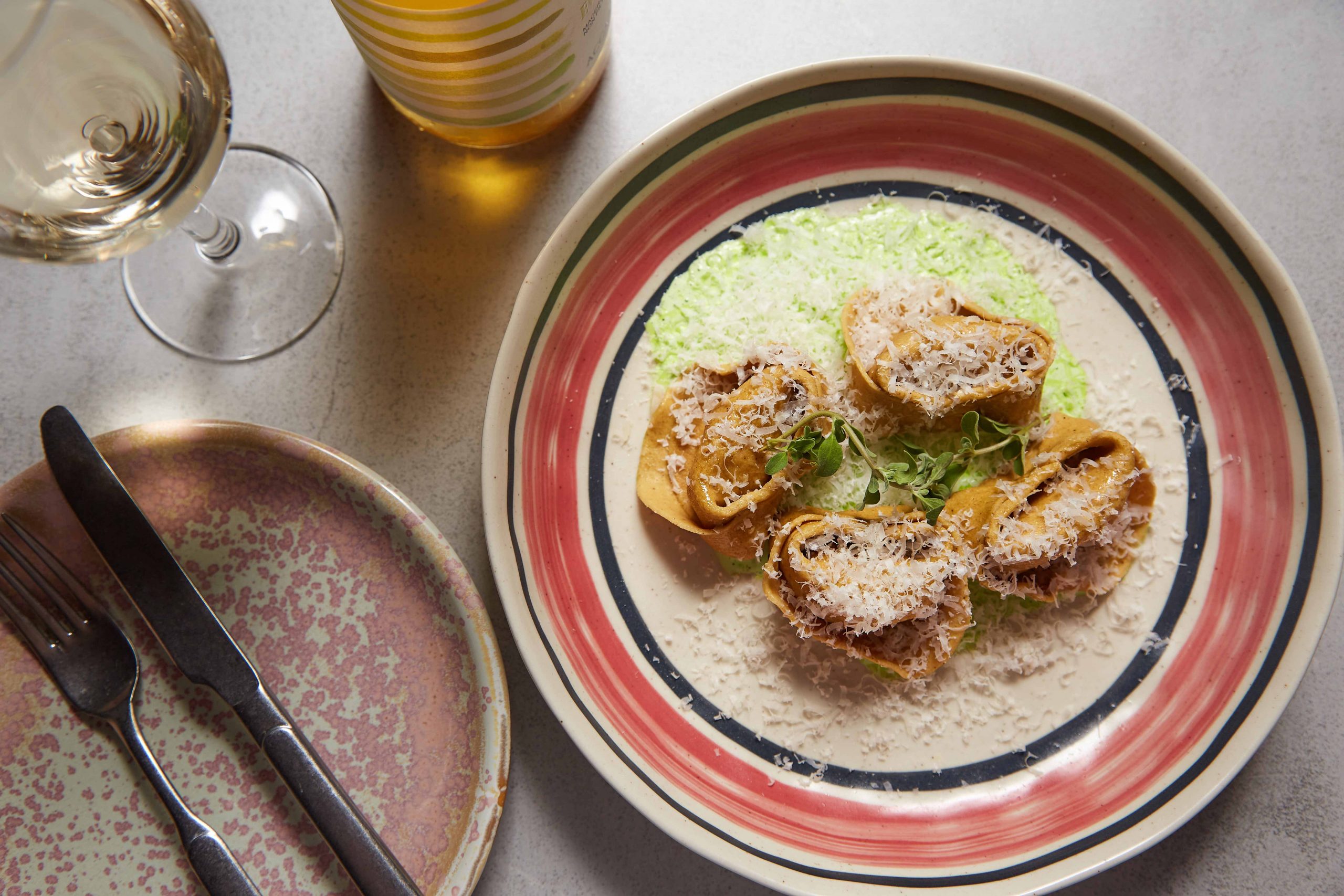
Serve with crusty bread, mashed potatoes, or buttered noodles, and a glass of Burgundy.